

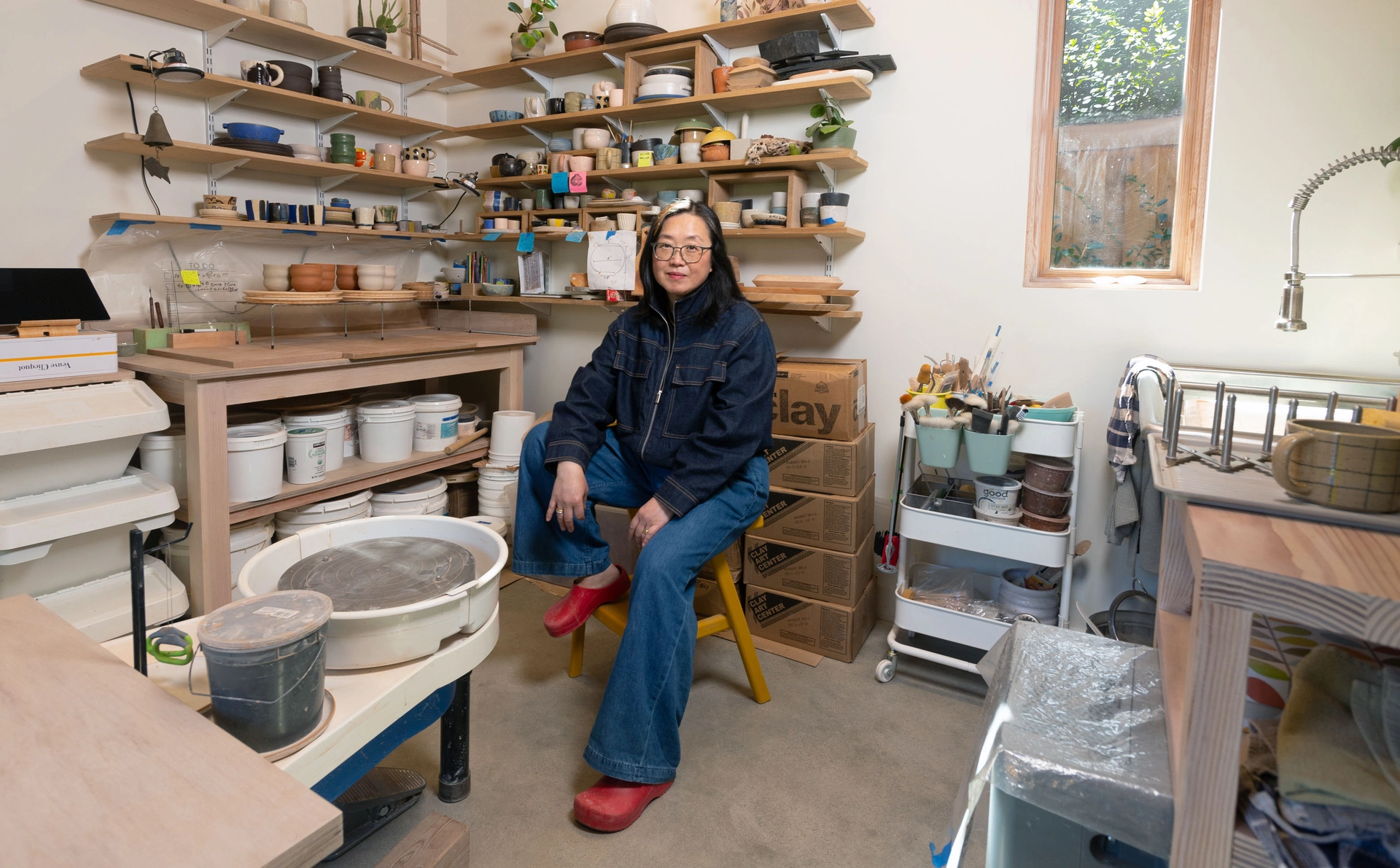
The beauty of the unexpected
Photos: Paul Wagtouicz
We sat down with Julie Byun at her Portland home to talk about working with clay, embracing imperfection, and the creative practice she returned to years after studying ceramics in college. From collecting everyday objects across Asia to building a dedicated studio at home, she shares the influences that shaped her work and why she leaves room for the unexpected.
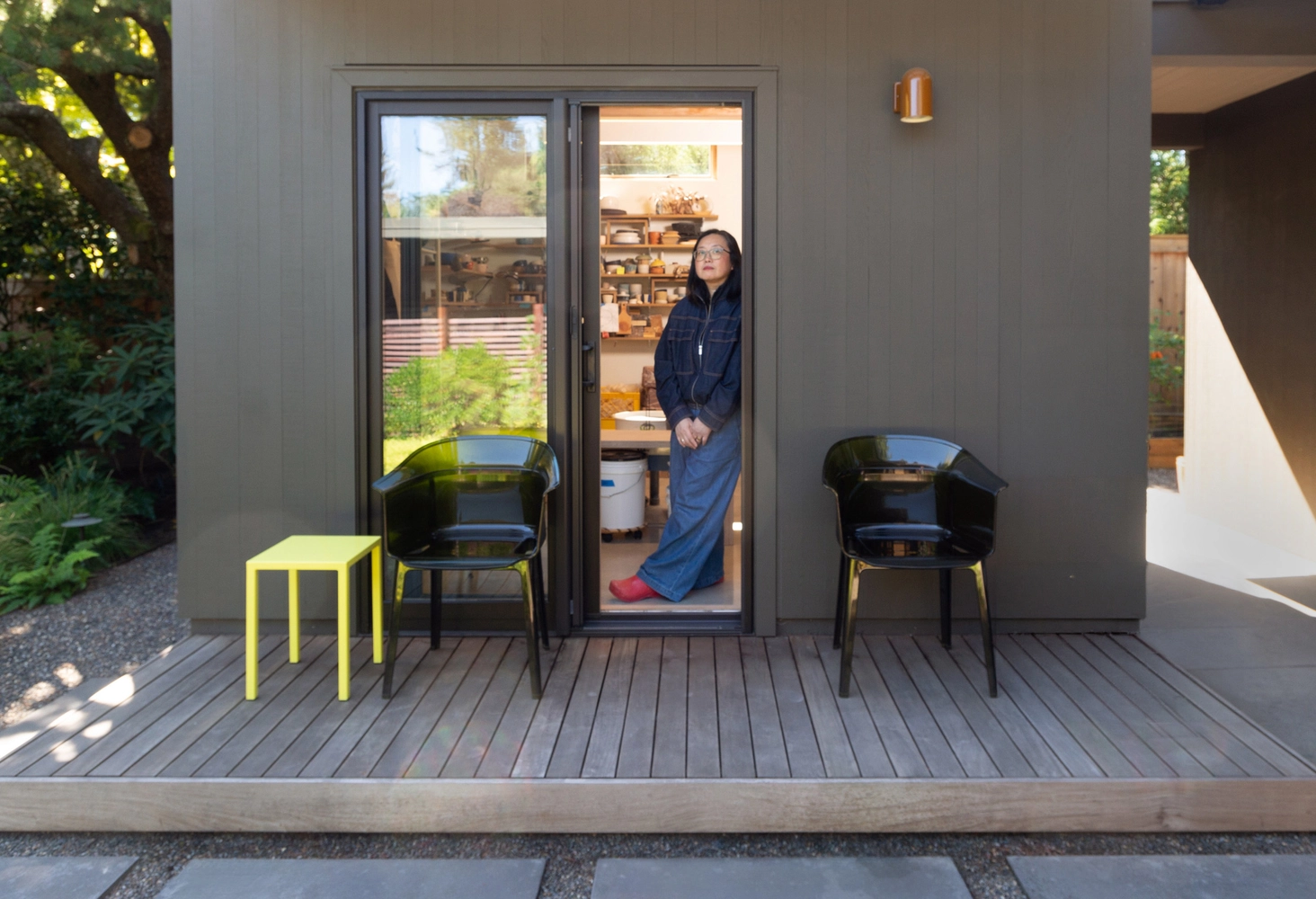
Q: You spend your professional life in project management and qualitative research, and your creative life working with clay. On the surface, they seem like very different kinds of work. Do you see a connection between the two?
A: They both require a ton of planning, process and timing. In project management, you’re always thinking about risks and contingency plans, and clay is fickle in a similar way. You can plan and measure everything, but there are still so many points where things can go sideways. The way a piece dries or fires can affect whether it warps or cracks. Working with clay has taught me not to get too attached to what I thought something was going to be.
The qualitative research side connects in a different way. We’re in the business of understanding how people think, feel and experience things. When I’m making something, I’m always thinking about the person who might use it. How are they going to hold it? What are they going to put in it? How will it fit into their life?
Q: What first drew you to clay? Was there a particular moment when ceramics shifted from an interest into something you needed to make space for in your life?
A: I tried it in fifth grade at the YMCA and just fell in love. My high school had a really great arts program and I basically lived in the ceramics studio. I also had a wonderful art teacher who became a very good friend throughout high school and college. At one point, she told my mom, “Don’t expect her to become a pianist or a doctor. Let her study art.” I’m so grateful she said that.
In college I majored in ceramics and art history. I was focused on hand building big vessels and at the time I kind of looked down on functional pottery, I thought of it as craft, not art. That completely changed when I spent several years traveling and backpacking around Asia in my twenties. In Korea, China, Japan and India, I kept collecting everyday objects - serving bowls, rice bowls and teacups. I started noticing how much care went into objects people used for their daily meals.
When I came back to New York, I got into project management and let go of doing anything creative for a while so I could pay the rent. Then, about twelve years ago, my best friend since childhood became sick with cancer. While she was going through it, she kept pushing me to get back to my creative roots. After she died, I couldn’t stop thinking about what she had said.
In 2018, I finally signed up for a beginner wheel-throwing class, and I just never stopped. Now I make functional pottery, which is kind of funny considering how I felt about it in college. I think she would be happy about that.
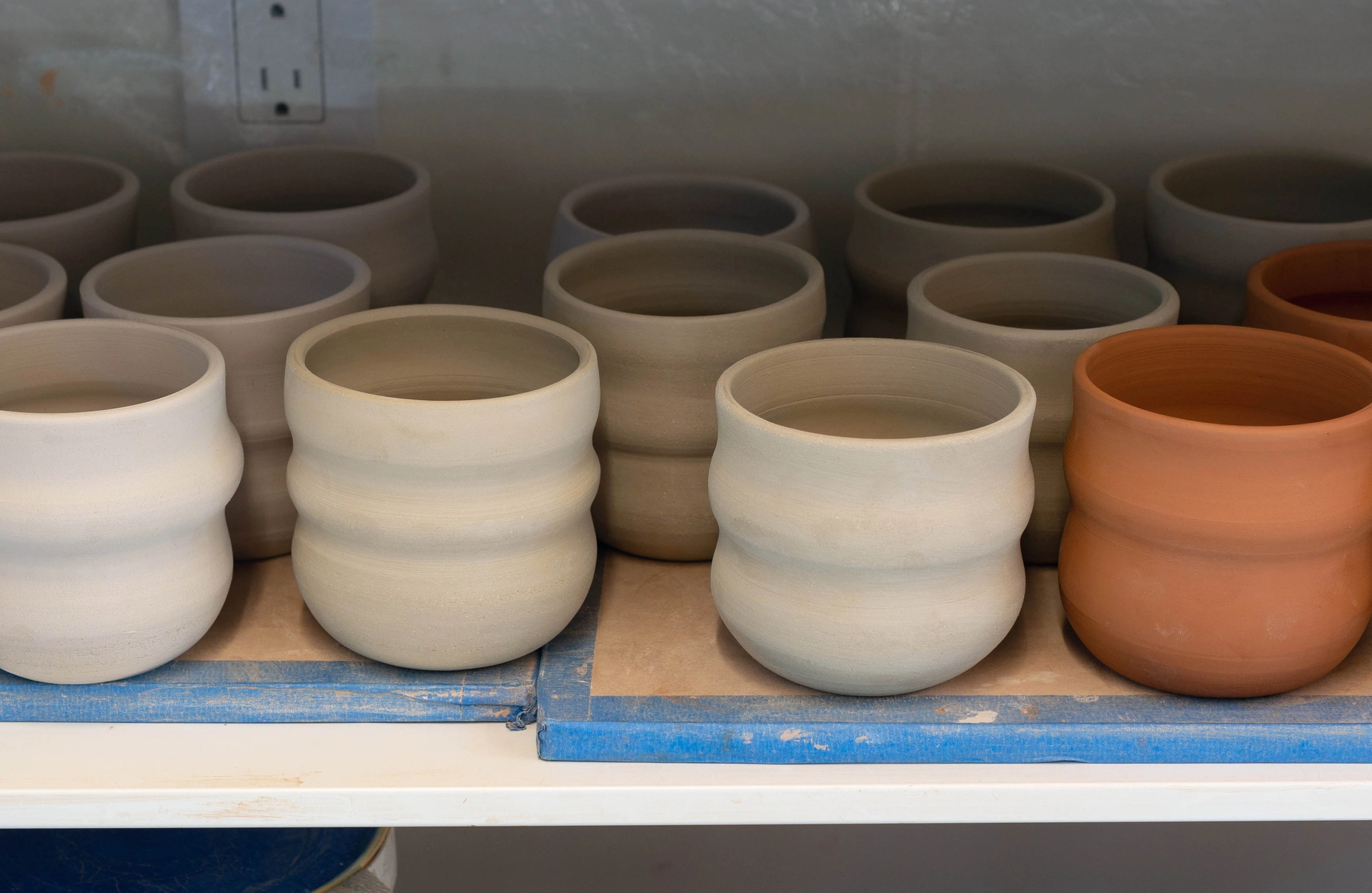
Q: Your work has a point of view that feels distinctly your own. How did you arrive at it and what continues to influence it?
A: When I wasn't making my own stuff, I was collecting — Korean and Japanese teacups and rice bowls, German sixties teapots from Rosenthal and Villeroy & Boch, Scandinavian mid-century/modernist ceramics and glass like Iittala. Growing up in New York, I used to love going to Moss in SoHo. It taught me to really look at objects and think about why certain things just feel right.
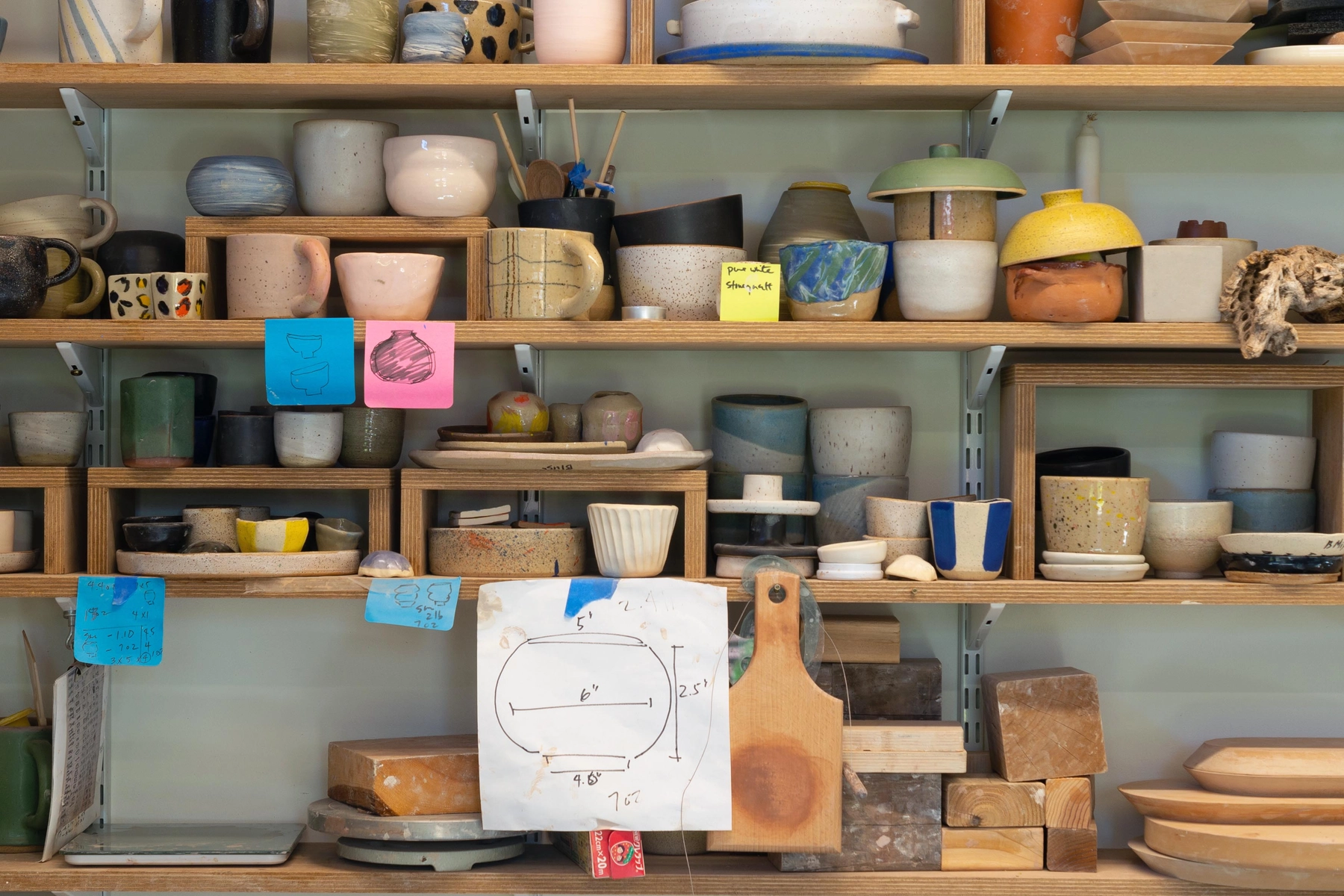
What I love most is the shape of something and how it holds food or a plant, how it can make something taste better or look better. My work is very simple – subdued colors, clean forms and bowls that are perfect for a home-cooked meal, nothing complicated. My dad always asks me to draw illustrations, but that's just not my thing.
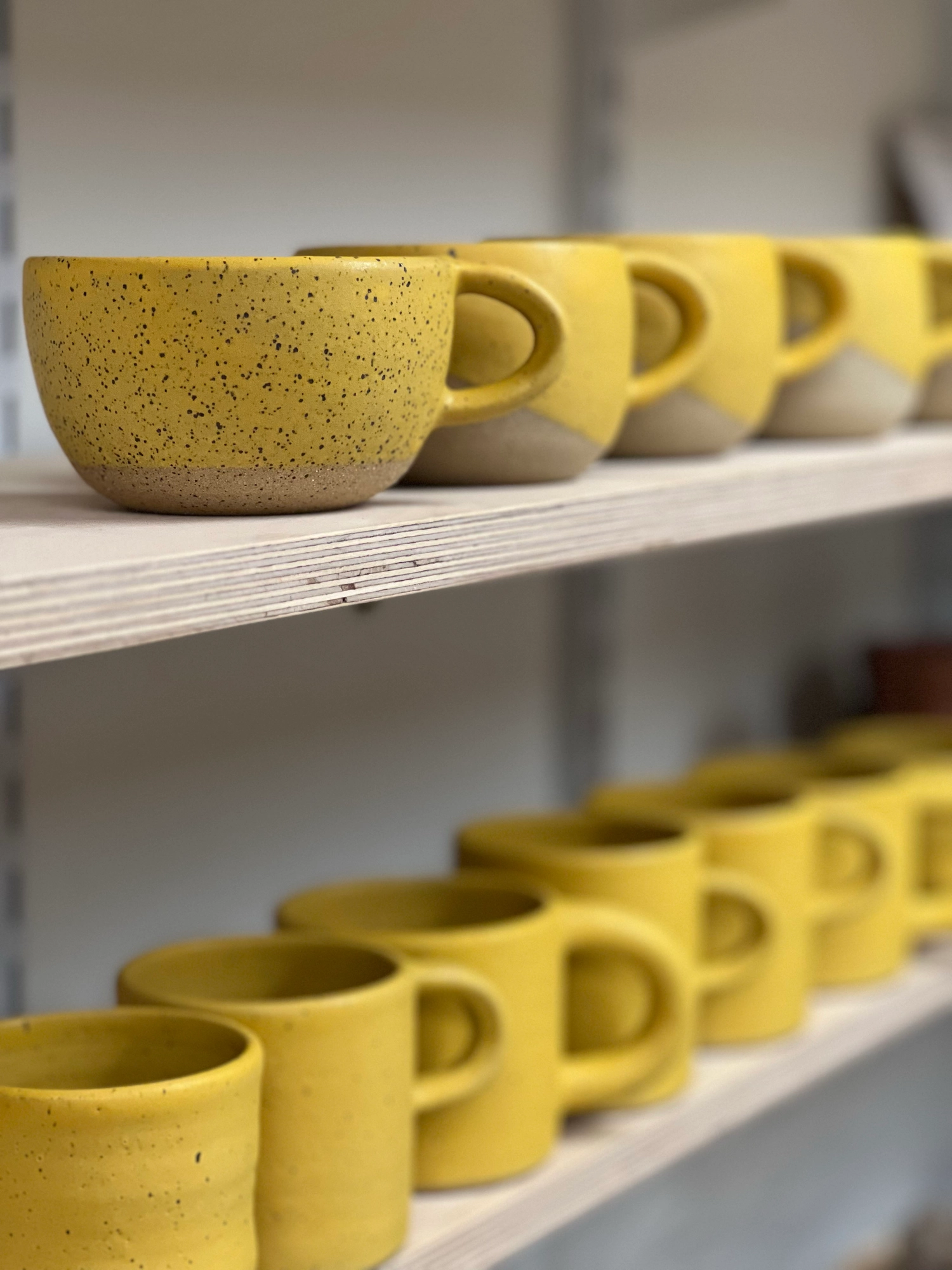
Lately, I've been making pieces that are the total opposite — really bright, bold colors, big stripes, saturated yellows, blues and oranges. And weirdly it comes from the same instinct. I love having one or two of those in a space that's otherwise calm. You open the cabinet and it just makes you smile. I want people to feel happy to use my pieces.
Q: Much of your work is made to be used and lived with. What interests you about creating objects that become part of people’s everyday lives?
A: I love the idea that someone might choose one of my bowls for breakfast every morning, or that one of my mugs becomes how they start their day. That feels so personal, and it makes me happy to be a small part of their lives. It’s also a way for us to stay connected, even if we don’t see each other.
During my travels, I picked up pieces I still use — a small cup from Korea, an incense holder from Myanmar. They've become part of my daily routine in a way that feels meaningful without being precious. If something I made does that for someone, I can't think of anything better.
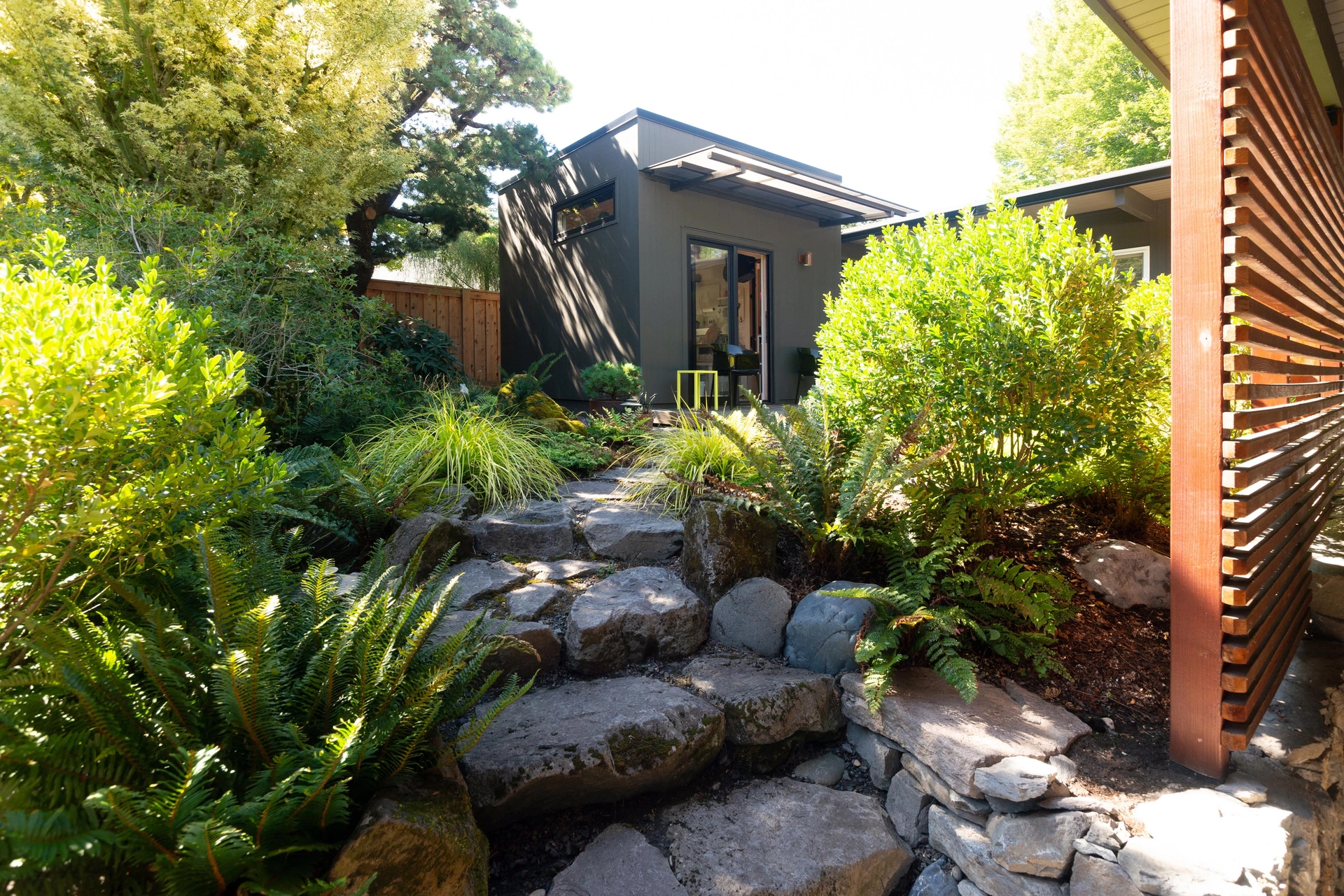
Q: You recently redesigned the landscape around your mid-century home and built a pottery studio as part of it. How did the house and landscape inform the design and placement of the studio, and has having a dedicated place to make at home changed your practice?
A: Having my studio at home has changed my practice so much. I used to drive to Morning Ceramics every weekend, and as I got more serious, we decided to build a small shed at home. The shed became a small studio and we ended up building it as an extension of the house, redoing the entire outdoor space around the house and studio in the process. We wanted it to maintain the home’s mid-century vibe while also bringing in the feeling of a Korean hanok where the feeling of inside and outside are really fluid.
The previous owners had already planted these beautiful Japanese maples and hinoki trees — the garden was originally designed by Hoichi Kurisu, who also designed the Portland Japanese Garden, so we had a wonderful foundation to build on.
Having my own studio and kiln at home since 2023 has completely changed everything. Before, I only had weekends, so I was always pushing to get through as much as possible, which was not great for my body or my work. Now I can spread things out. Wedge clay one night, come back to it later. Sit with something longer before I decide what to do with it. I finally have time to think about what I actually want to make.
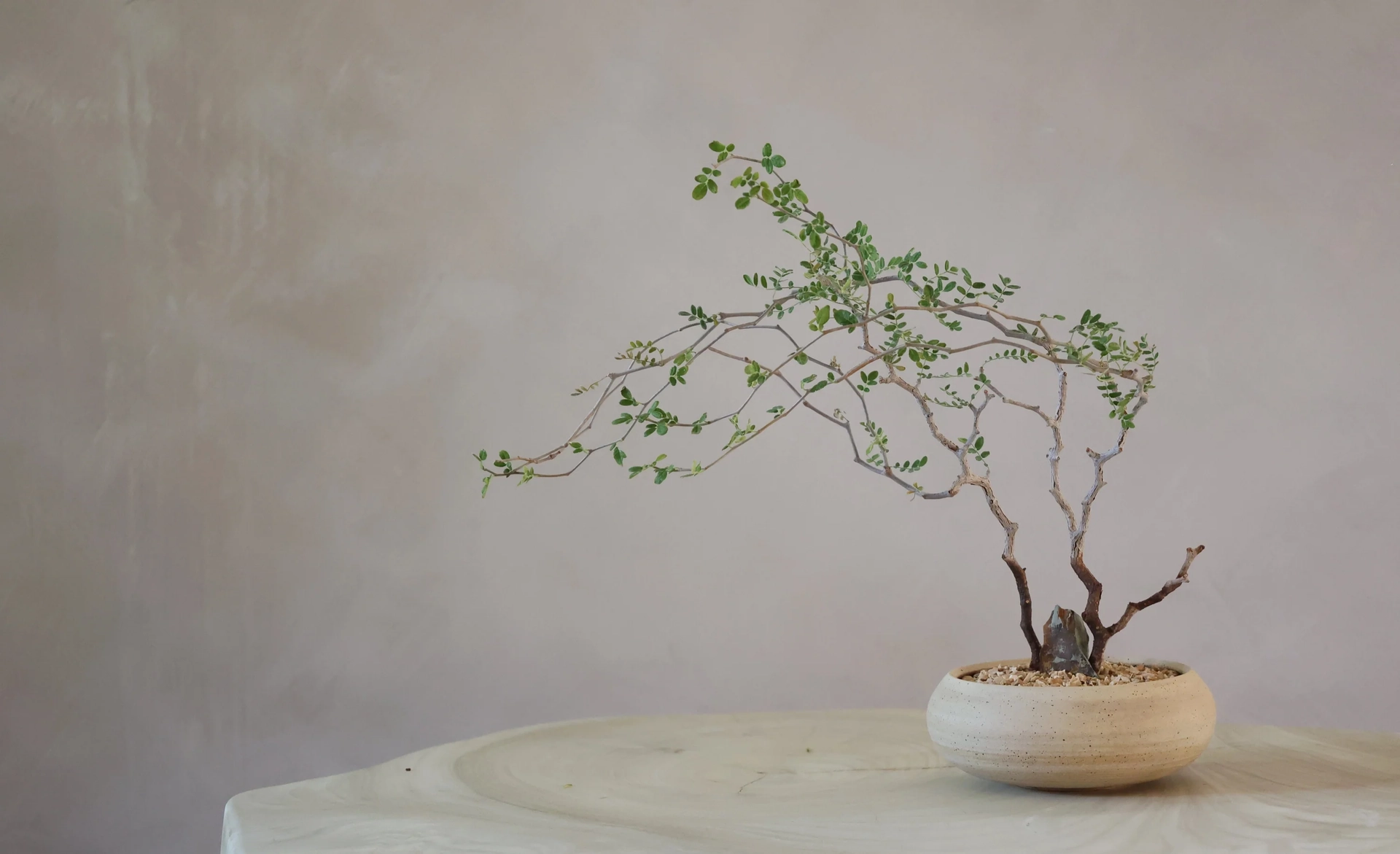
Photo: Plantify
Q: Working with clay comes with a certain unpredictability. Forms change in the kiln, glazes behave differently than expected, and no two handmade pieces are quite alike. Has working this way changed your relationship with perfection or control, in the studio or beyond it? And when you look at your ceramics, your garden and your home, do you see a common thread?
A: My professor in school used to say, “beauty in imperfection”. It sounded cool but I didn't really get it.
My first big production order was a sixty-piece dinnerware set and I was so stressed trying to make each one perfect. Over the years I've genuinely started to enjoy the surprises and mistakes -a glaze that does something unexpected in the kiln, a rim that warped a little and ended up being more interesting because of it. I'm still learning to let go but I’ve come to l appreciate these imperfections much more.
And yeah, I definitely see a common thread across the ceramics, the garden and the house. The garden is serene, with the maples and hinoki trees, and then the light hits something in a surprising, beautiful way. That’s what I’m going for in my ceramics too: calm and simple, but with one bright mug or planter that suddenly pops.
Q: And to finish this VS Session the way we always do—what’s your go-to karaoke song?
A: Just like Heaven by the Cure and Killing me softly by the Fugees.
Contact:
To purchase Julie's ceramics, visit Plantify or Woodland Mod in Seattle. To connect, or if you’re interested in a custom commission, reach out directly to Julie via @byun.ceramics.